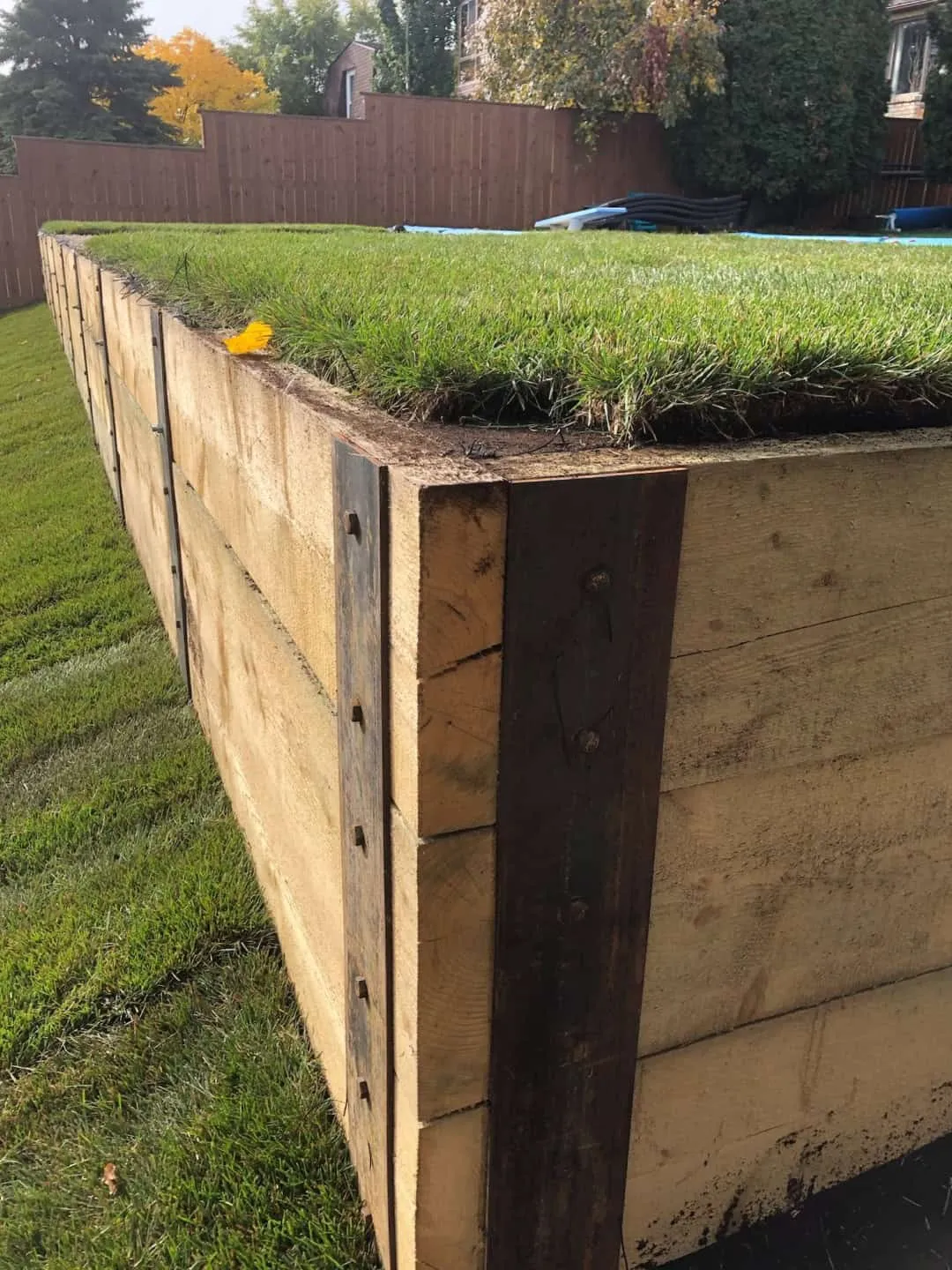
Your Wall Is Doing What Tie Walls Do
Most railroad tie and timber walls around Winnipeg went in between the 1970s and the 1990s. They were a reasonable choice at the time and plenty of them held up well. Wood sitting in wet clay has a service life though, usually 15 to 25 years.
So if yours is bowing out or the ties are going soft, nothing got neglected. The wall aged out and you noticed. That’s the good version of this problem. A planned replacement costs less and goes smoother than an emergency one after a wall collapses.
- Building since
- 2014
- Rated on Google
- 5.0
- Working across
- Winnipeg and southern Manitoba
Why Railroad Tie Walls Fail Faster in Winnipeg
Our soil and our winters are harder on retaining walls than most places.
-
Clay that never stops moving
Red River clay swells when it takes on water and shrinks when it dries out. That cycle puts steady pressure on the back of a wall that was never engineered to resist it.
-
Freeze and thaw
Water trapped in the backfill freezes, expands, and lifts the ties. Each spring the wall settles back a little further out of line than the year before.
-
Spring melt
Saturated soil is heavy soil. With no drain pipe and clear stone behind the wall, the wall carries all of that weight itself.
-
Rot from the buried side
The face can look passable while the back half of the tie has gone punky. Press a screwdriver into it and you'll know in a second.
-
Loose spikes and rebar
As the wood shrinks, the hardware pinning it together works its way out. Those ends are sharp and usually right at kid height.
About the Creosote
Older ties were treated with creosote so they could survive under train track. Weathered ties can leave a black tar residue on hands and paws, and we don’t recommend them anywhere near vegetable beds or play areas.
It also changes disposal. Treated railroad ties can’t go out with regular yard waste, so hauling and proper disposal shows up as a real line on your estimate. Worth knowing before you see the number.
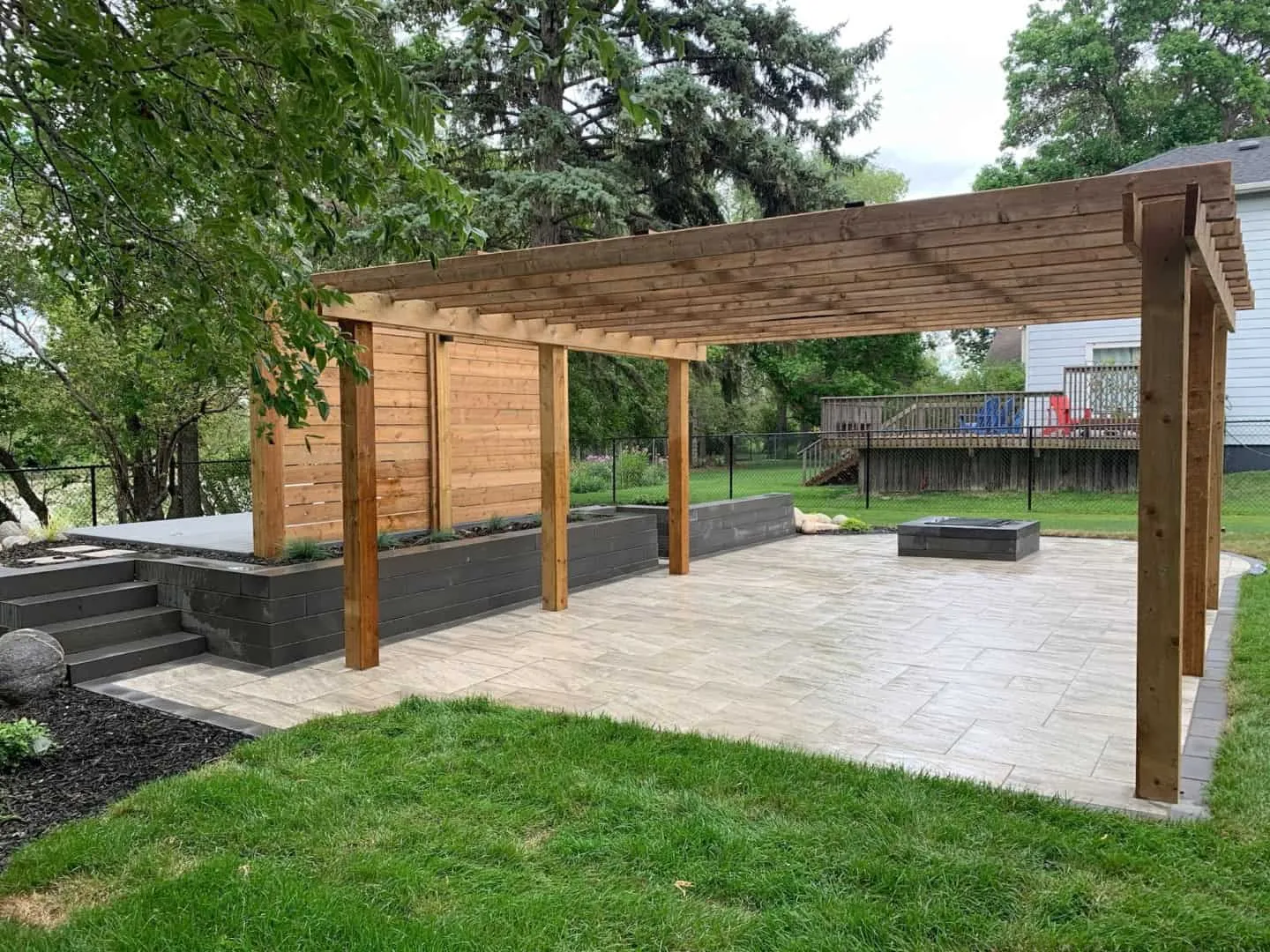
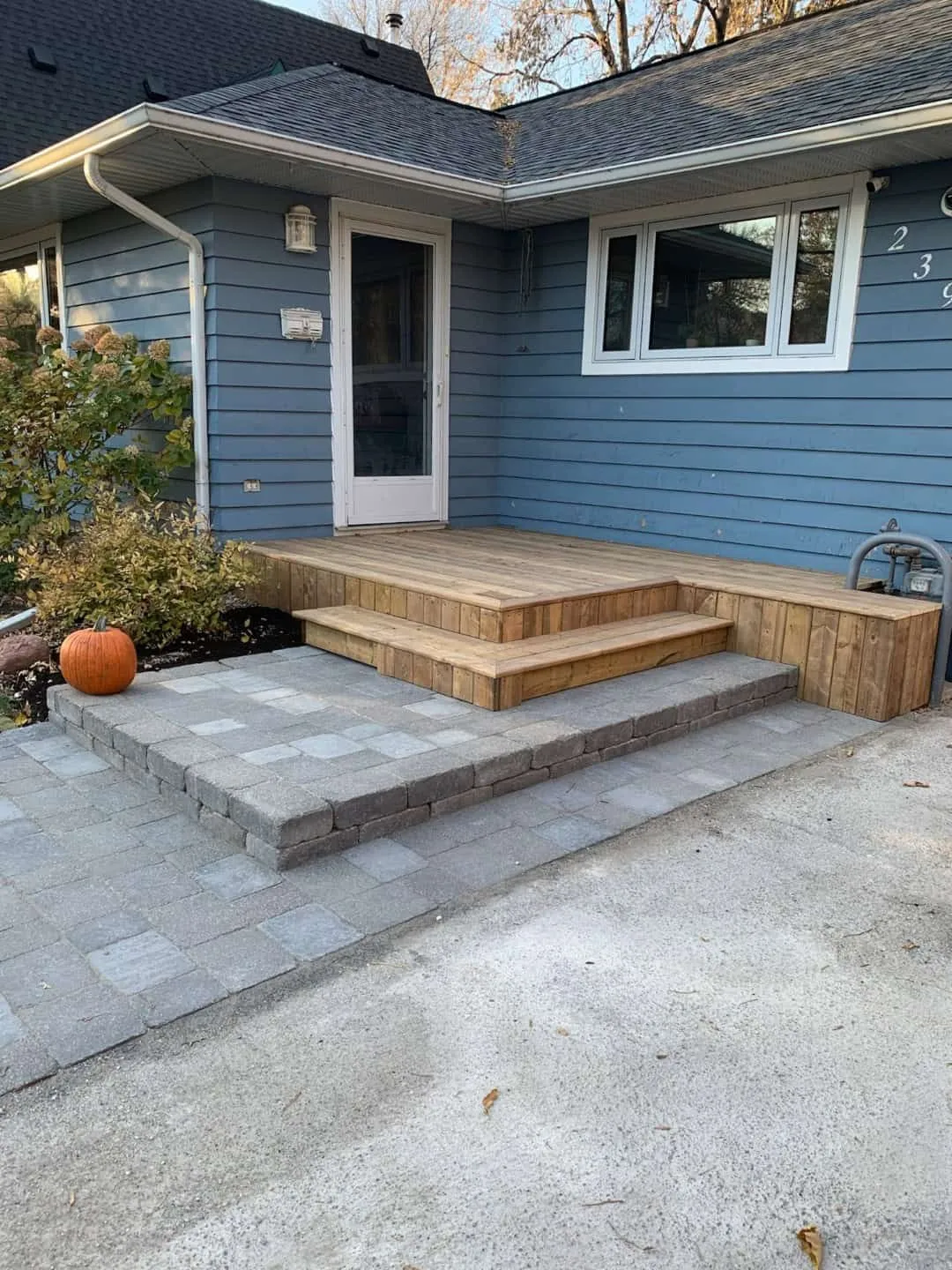
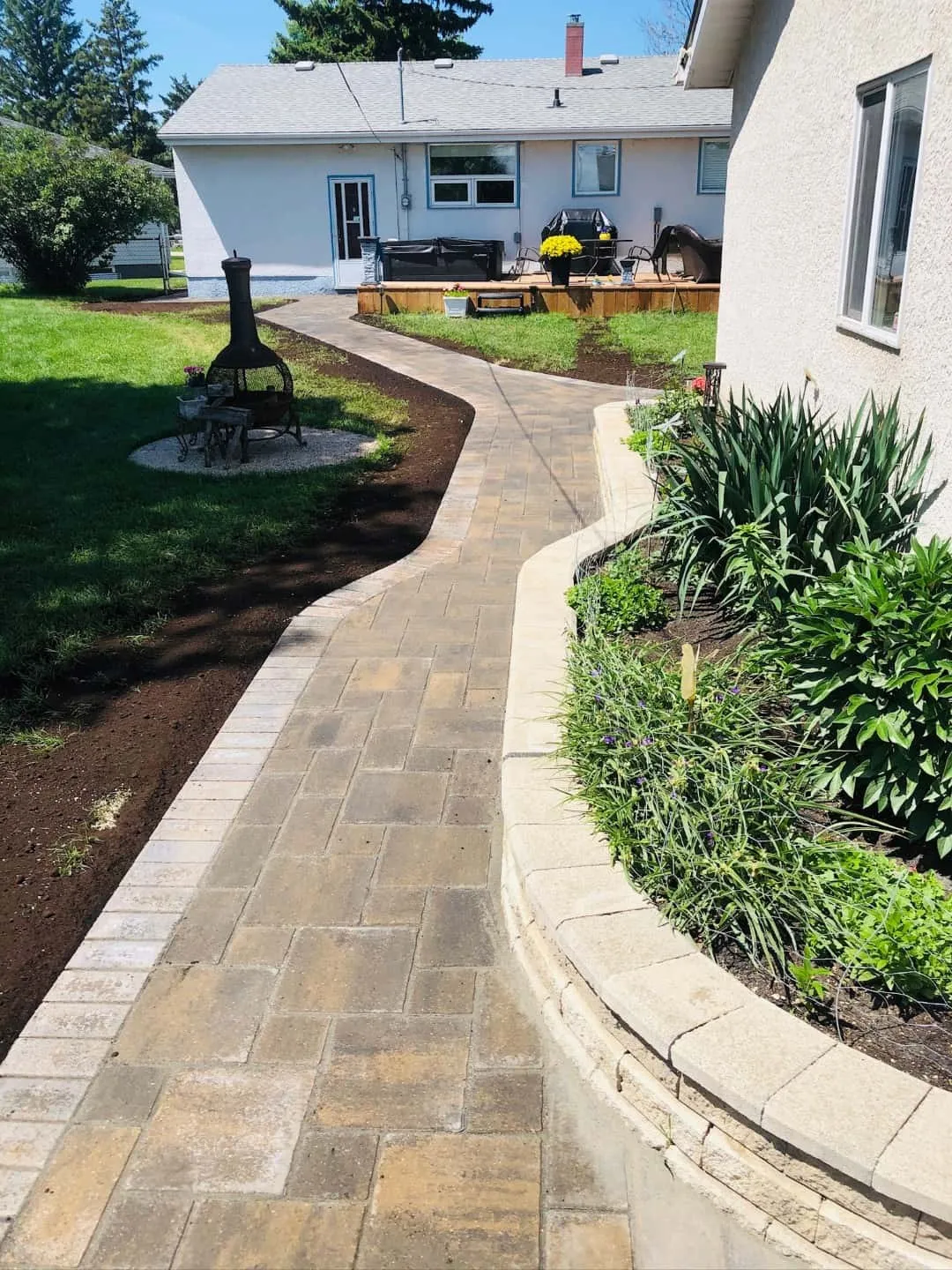
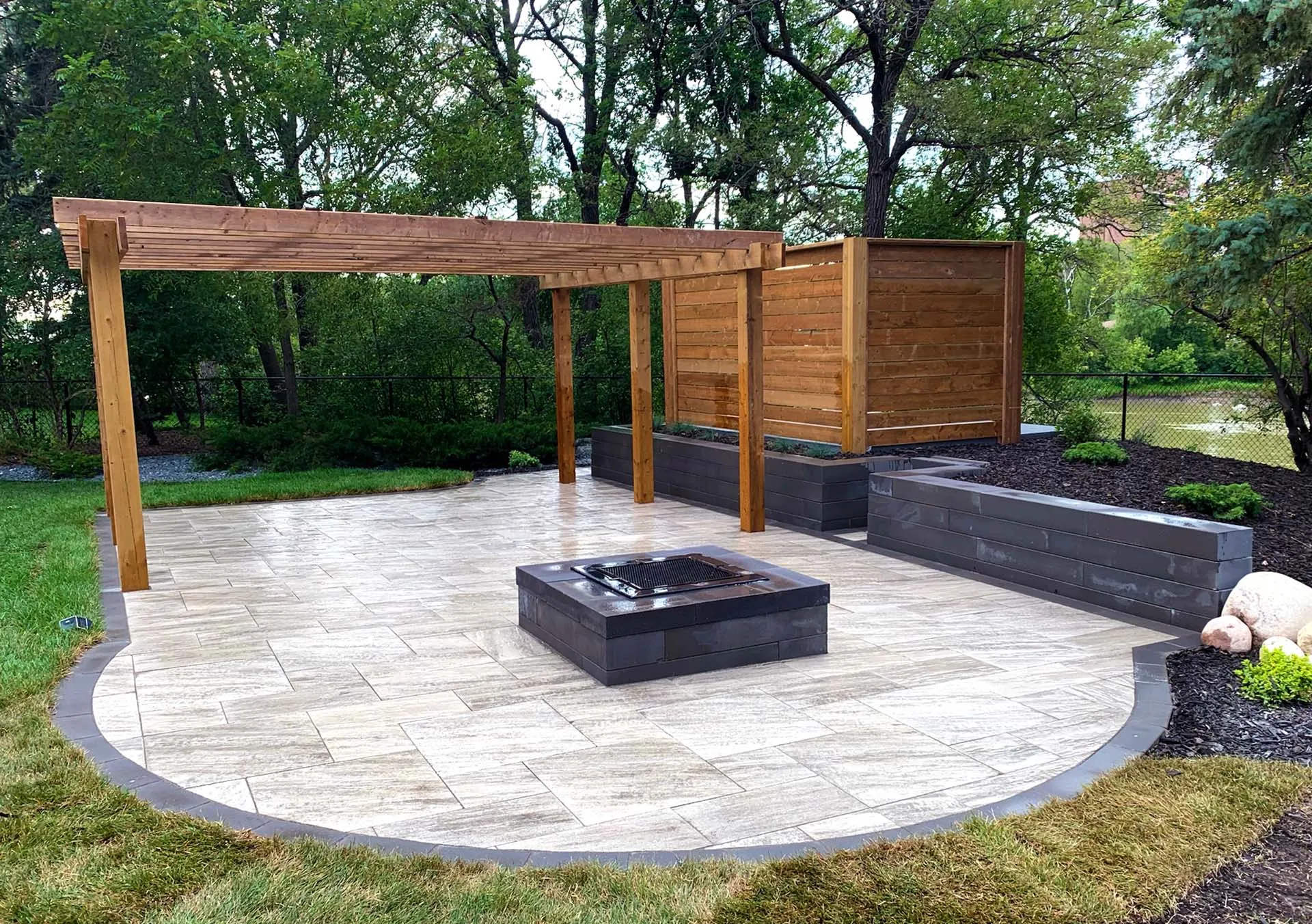
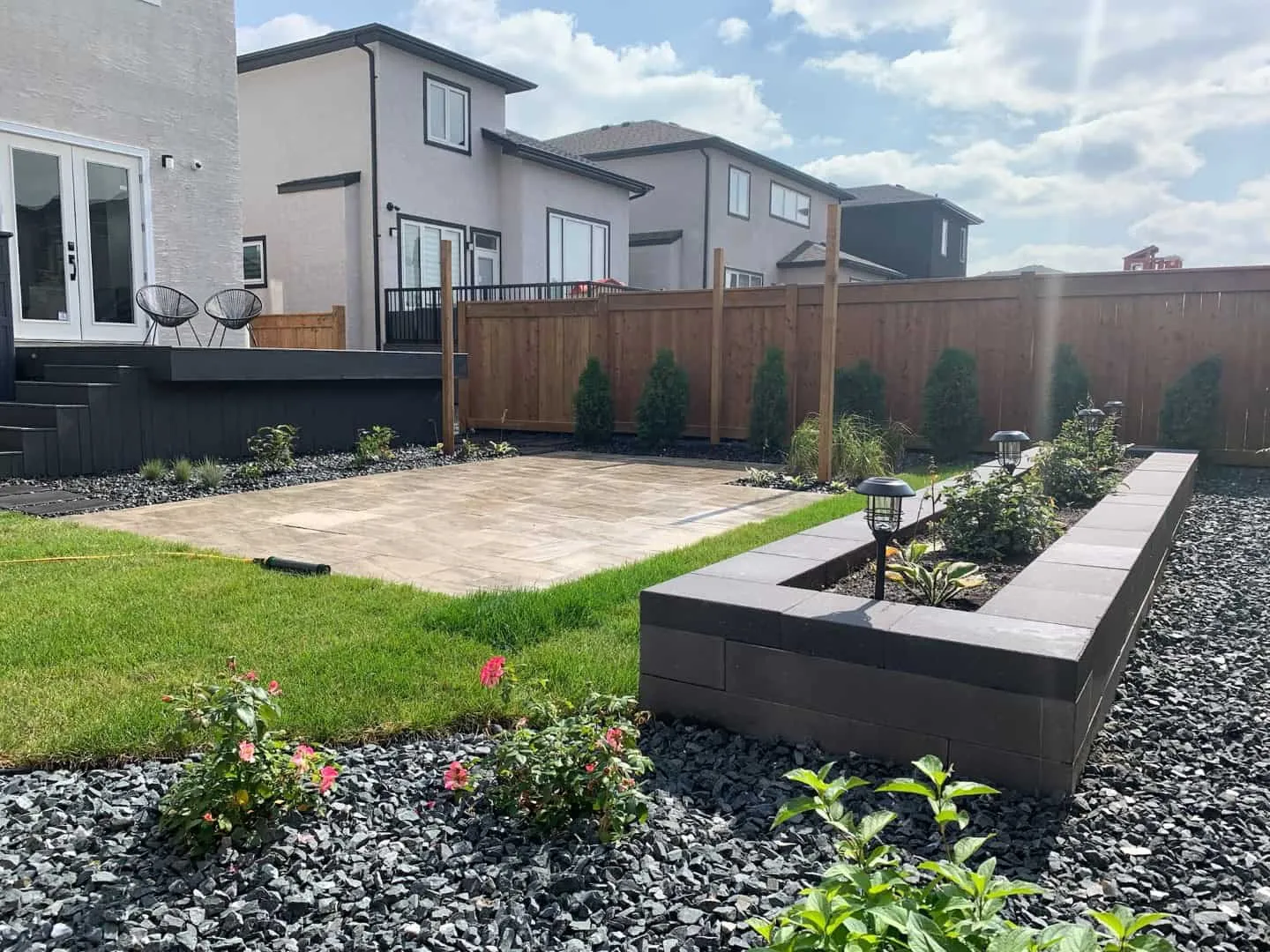
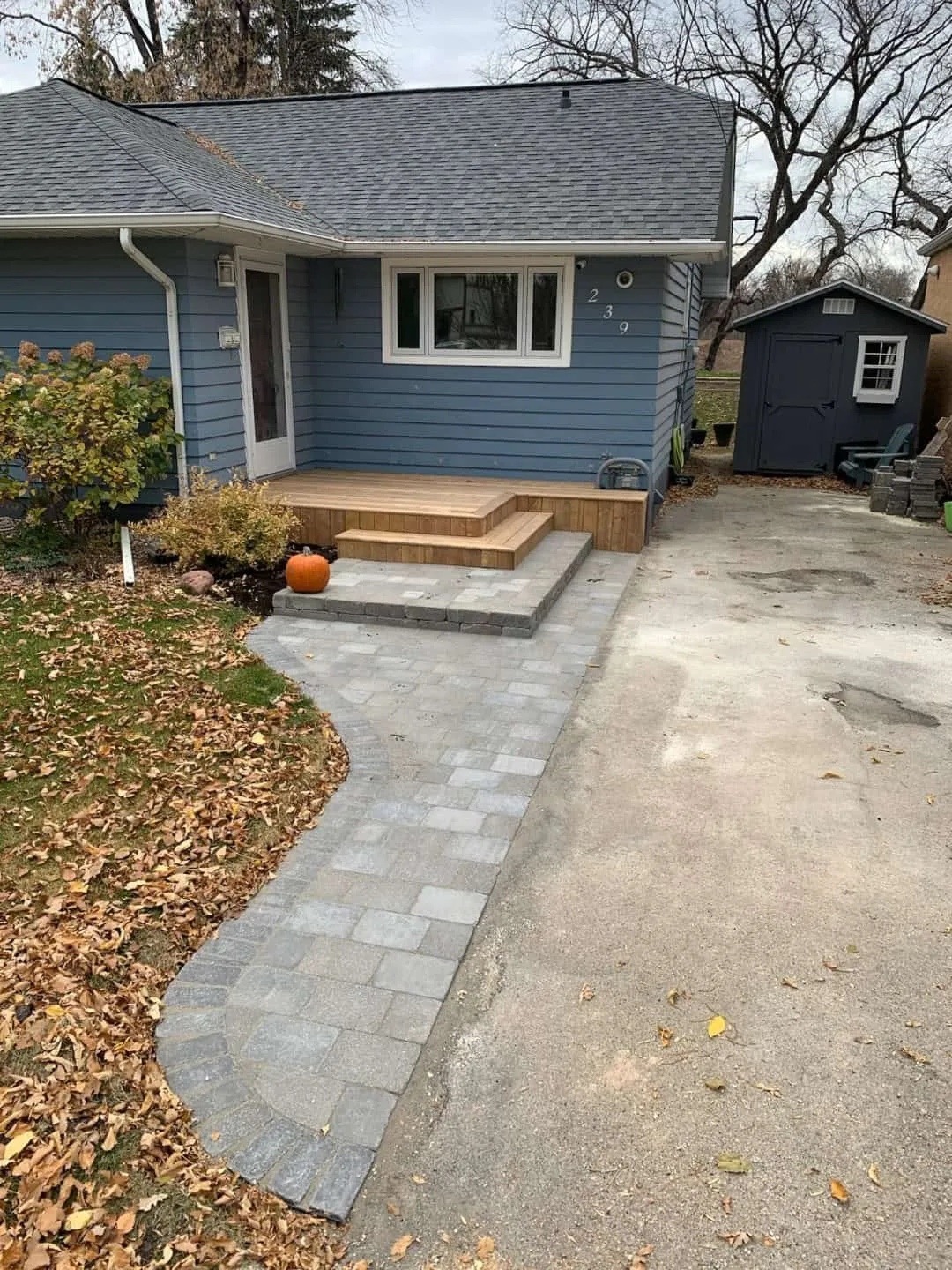
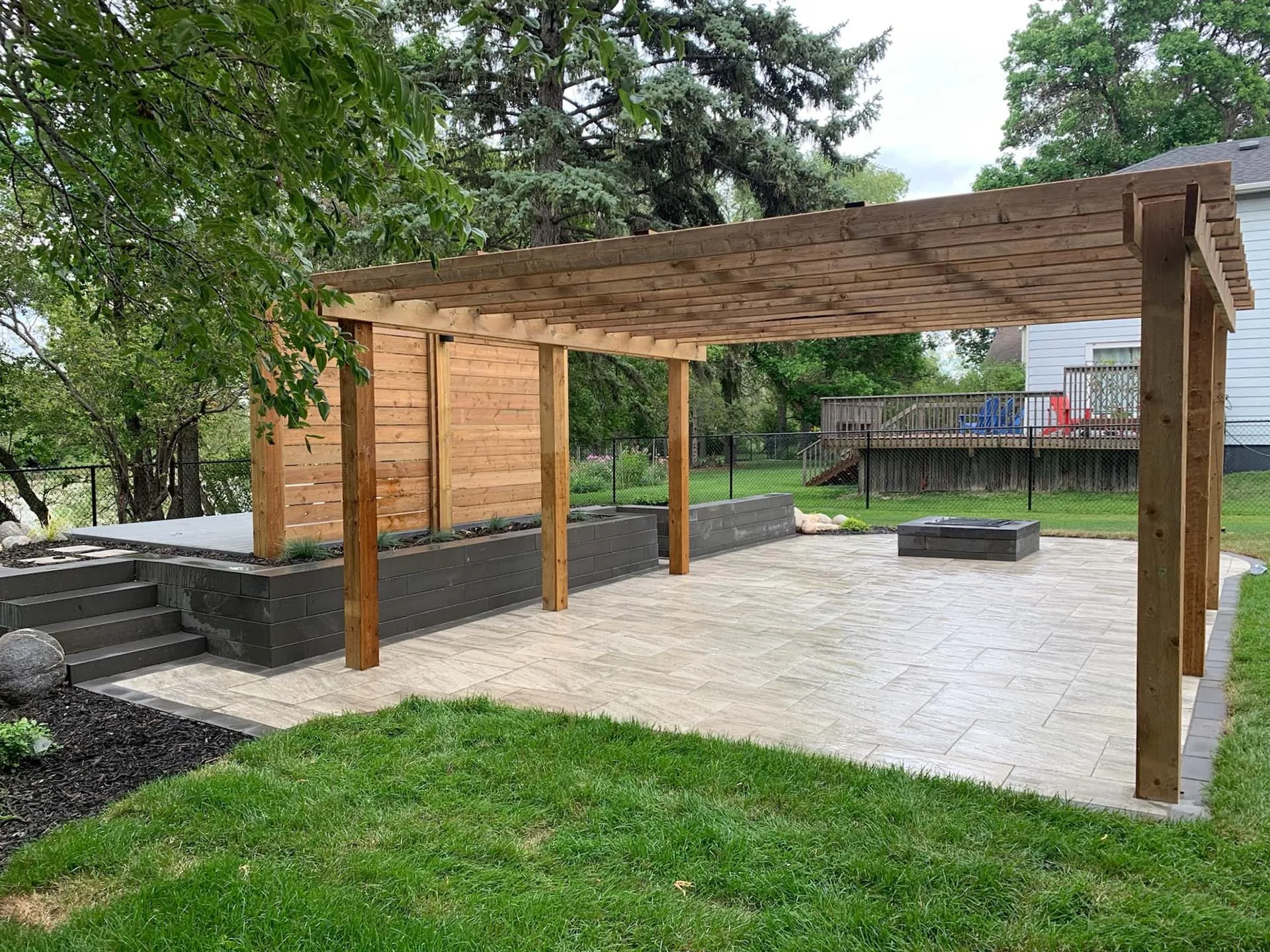
Retaining Walls We’ve Built in Winnipeg
This is the kind of wall that goes in when the ties come out.
How to Tell if You Need a Railroad Tie Retaining Wall Repair
Not every old railroad tie wall is urgent. Here’s how we sort it before we ever drive out.
Get it looked at soon if you see
- A lean or a belly in any section, especially if it has moved since last year
- Ties you can press a thumb into, or edges crumbling off
- Soil washing out through the gaps after a heavy rain
- A patio, fence, deck, or driveway above the wall starting to settle or crack
- Water pooling behind or on top of the wall instead of draining away
- Anything people walk on sitting above it
Keep an eye on it for now if
- The wall is under about two feet and just looks tired
- It's still holding a straight line with no new movement
- Drainage is working and nothing is pooling
- Nothing structural sits above it
If you’re not sure which list you belong on, text us a couple of photos at 204-232-1644. We’ll let you know, and there’s no charge for the answer.
What a Wall Replacement Actually Involves
-
Assessment
Height, length, what the wall is holding back, and where water moves across the yard.
-
Engineering and permits where required
Taller walls, and walls holding up a driveway or a structure, can need a stamped design and a City permit. We take care of that piece.
-
Demolition and disposal
Ties, spikes, and any failed drain pipe come out and go to the right facility.
-
Excavation and base prep
We dig back behind the old line, pull out unstable clay, and build a compacted granular base.
-
Drainage
Perforated pipe, clear stone, and filter fabric. This is the part that decides whether the new wall lasts 40 years or 10.
-
Building the wall
Block, stone, or timber set level and locked in course by course.
-
Backfill and finish
Compacted in lifts, then final grading and cleanup.
Most of the budget goes into the parts you’ll never see again. It’s also what makes a properly built wall outlast the old one by decades.
What We Build in Its Place
The lifespans are what each material is rated for. Which one suits your yard is a conversation we’ll have together.
-
Segmental concrete block
40 to 75 yearsThe default for most Winnipeg yards. Engineered to interlock and drain, available in a range of colours and textures, and can be reinforced with geogrid when the wall gets tall.
-
Natural stone
50 years and upBest where the wall is part of the view, like a front yard or a garden terrace. More labour and more money, and the longest life of anything we build.
-
Poured concrete
50 years and upFor tall cuts, driveway edges, and tight spots where the wall has to be thin and very strong. Can be faced with stone afterward.
-
New pressure treated timber
15 to 25 yearsStill a fair answer for a short garden wall or an area you plan to redesign later. Lower cost up front, warmer look, and we're back at this again inside a couple of decades.
What a Railroad Tie Retaining Wall Costs in Winnipeg
These are the variables that determine the estimate for a railroad tie retaining wall repair or replacement.
-
Height and length
A two foot garden wall and a six foot wall holding up a driveway are different projects entirely.
-
Access
Whether we can get a machine into the back yard, or everything gets wheelbarrowed down a narrow side yard.
-
Material
Timber is cheapest up front. Block and stone cost more and last two to four times longer.
-
Drainage and reinforcement
Geogrid, extra drain runs, and engineered plans add cost and add lifespan.
-
Disposal
How many creosote ties are coming out and where we can stage them.
Most people don’t need an exact figure over the phone. They need to know whether this is a small, medium, or large project. We can usually tell you that from photos, then put a written price in your hands after a site visit.
How Long Will the New Railroad Tie Retaining Wall Last
Longer than the old one by a wide margin, provided the water has somewhere to go. Drainage is what kills retaining walls in Winnipeg, more than material choice and more than frost. Every wall we build gets a drain, clear stone, and a proper compacted base.